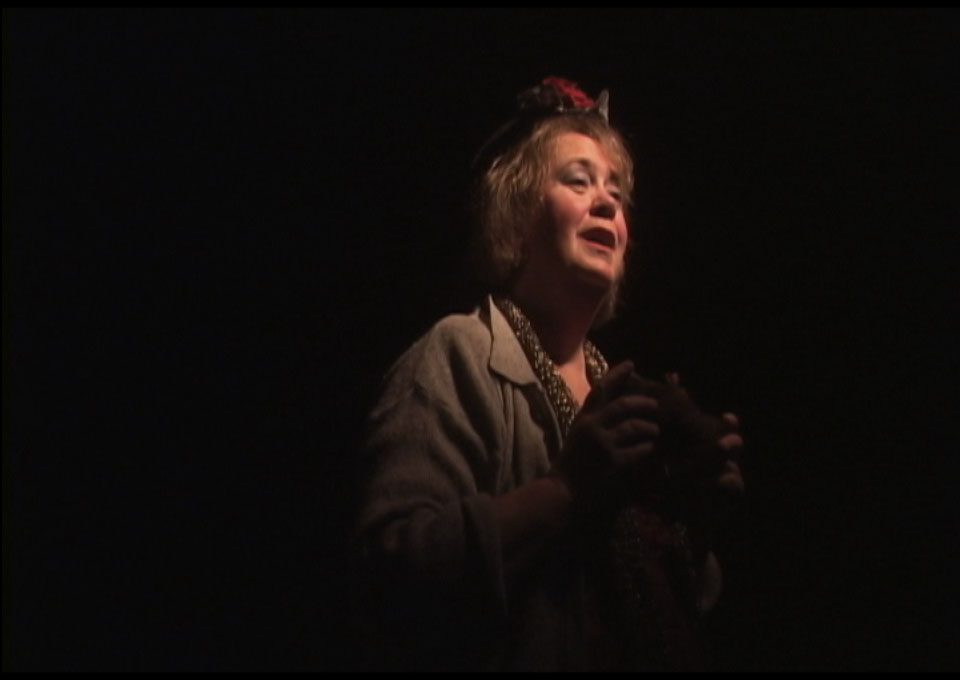
The first part of this webpage is what I sent to Lynne via email. It is followed by a lot more information to help in case the Taos News decides to write something about our event. Please help us if you can. The performance is FREE and all are welcome.
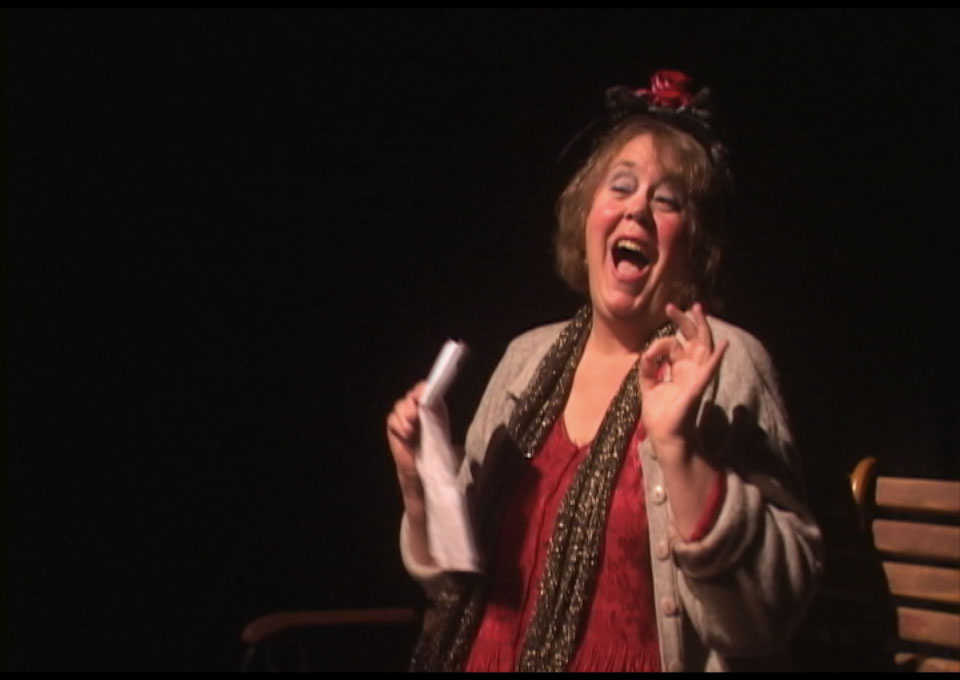
On May 21 and May 24, we will be performing our popular, one-woman music theater work Street Scene for the Last Mad Soprano. We’re hoping you might write something for Tempo about the work and performances.
Street Scene for the Last Mad Soprano
When: Thursday May 21 at 7:30 PM
Plus at matinee on Sunday, May 24 at 2:00 PM
Where: Abbie’s Studio Theater
114 Los Pandos, Taos, NM
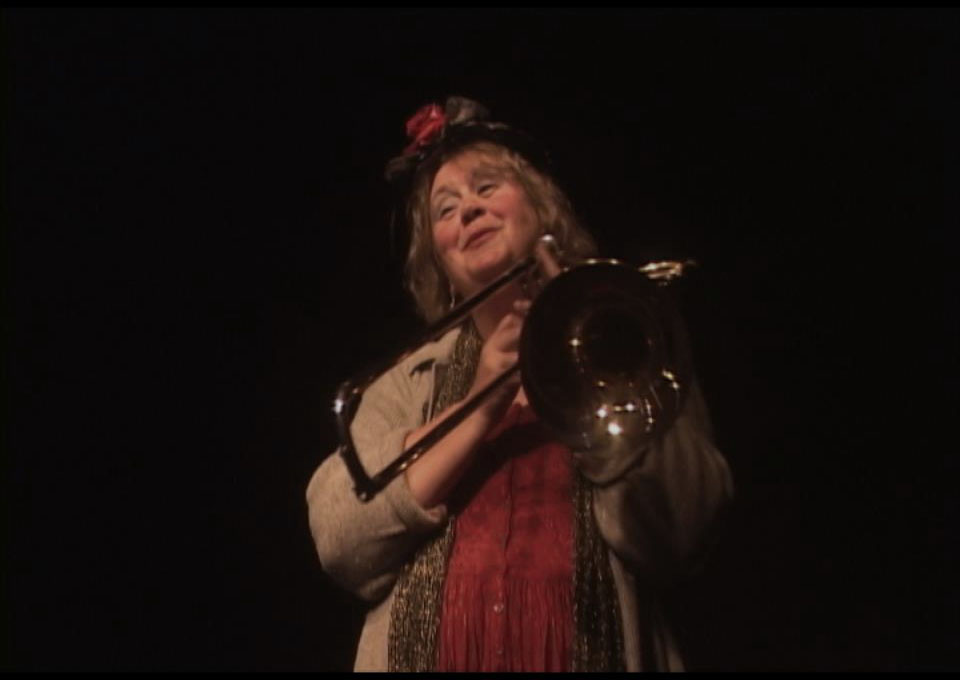
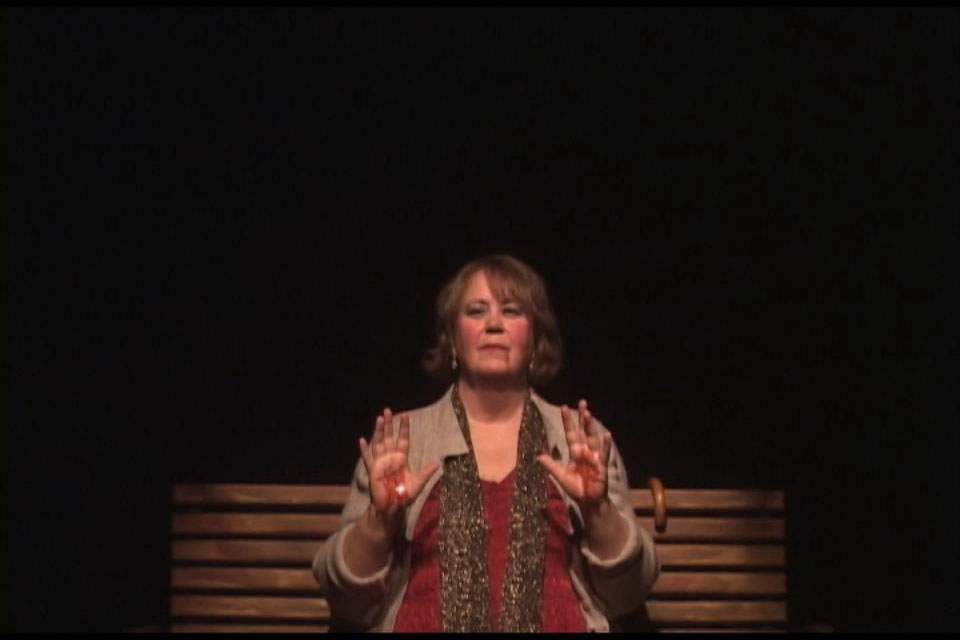
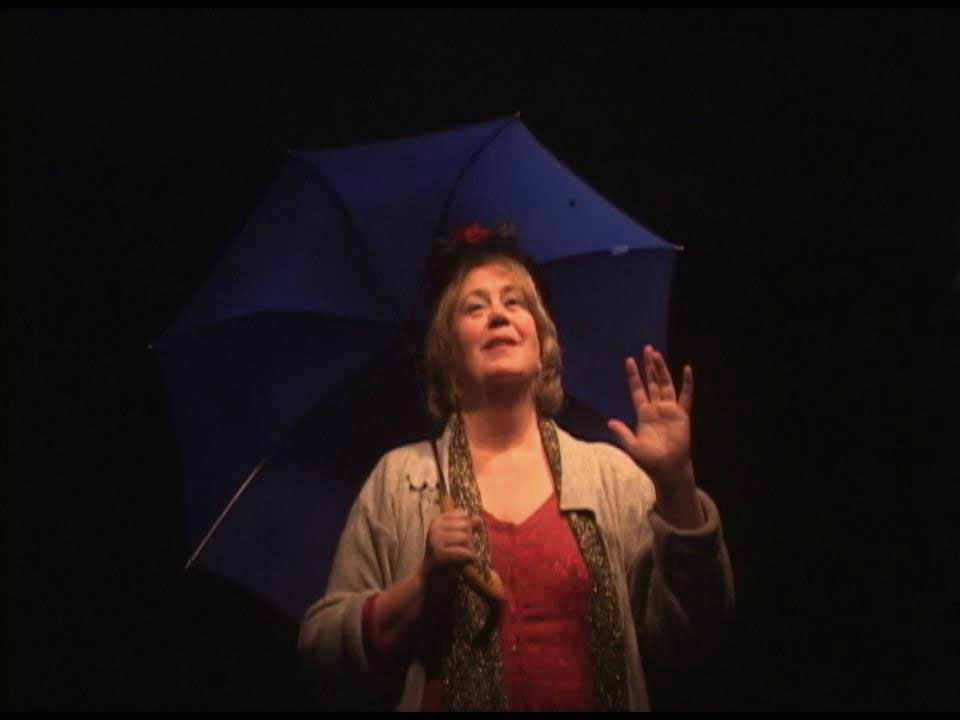
Abbie Conant: Performance Artist
William Osborne: Music, text, and direction.
Abbie Conant and William Osborne
Tel. 575-240-4913
The performance is FREE and all are welcome.
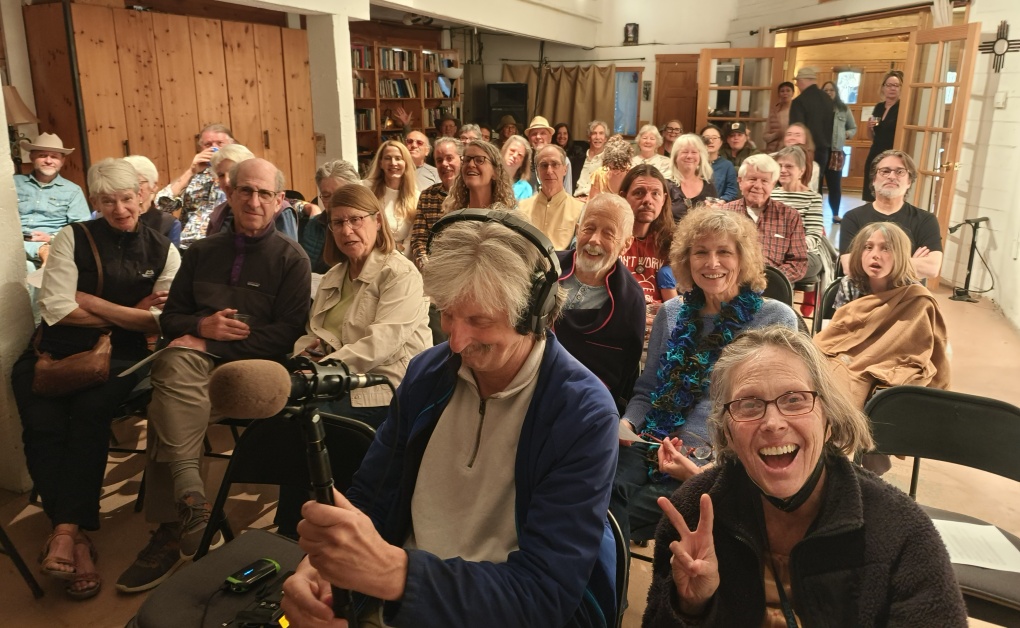
Our studio is a fully equipped black box theater that can seat up to 60. Following in the tradition of Mabel Dodge Luhan, we have presented 22 cultural salons in our studio. Street Scene for the Last Mad Soprano will be the 23rd. Here is a photo of our studio during one of our events:
Abbie’s victorious struggles against sexism are iconic in the classical music world. Her experiences inspired Malcolm Gladwell’s book Blink which was on the New York Times Bestseller List for 18 weeks, and three weeks in first place. Due to Abbie’s experiences, most of our music theater works explore the freedom and creative identity of women. Two doctoral dissertations have been written about our music theater work. (See the link for our bios at the bottom of this page. At the bottom, there are also several photos of the production.)
About Street Scene
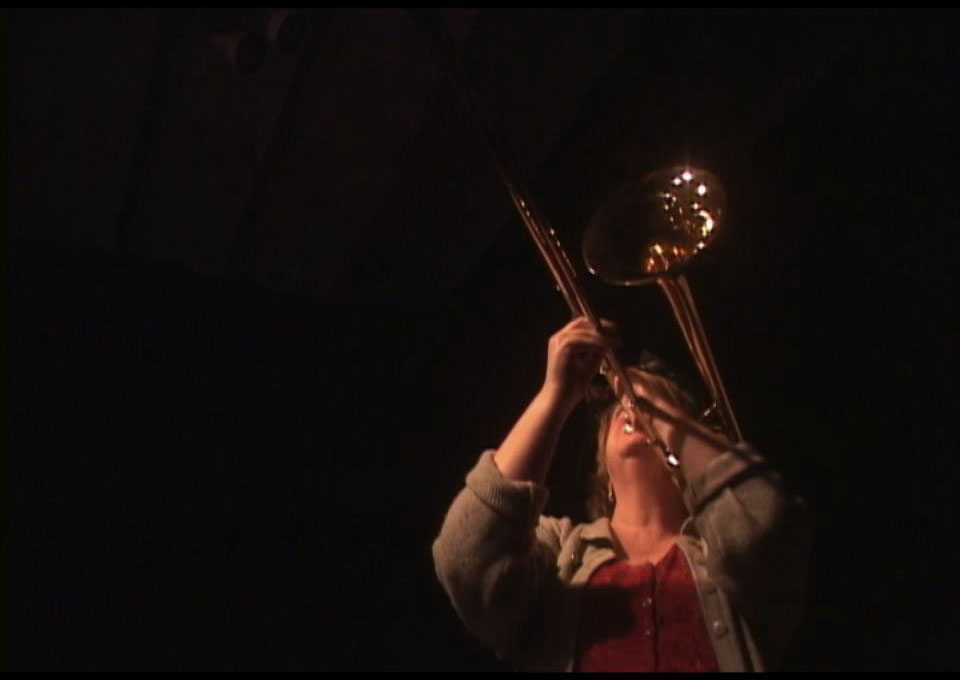
Imagine a singer living among the dumpsters behind the Metropolitan Opera House. Tomorrow is her big audition there--if only she could think of what to sing. She colors her world with opera excerpts, grandiose Swan Songs and wild escapades on her trombone--but as she prepares for her final big audition, we see that the brutality of the street has long since caused the borderlines between real life and opera to blur.
Street Scene explores the belief that cultural identity is necessary for survival, that it is a way of confronting our human condition. We examine the stereotyped ways women are portrayed in opera, especially the violence they suffer, homelessness, and domestic violence.
Many of the themes in Street Scene for the Last Mad Soprano could be summarized by this stanza from Wallace Stevens’ poem The Idea of Order at Key West:
“And when she sang, the sea,
Whatever self it had, became the self
That was her song, for she was the maker. Then we,
As we beheld her striding there alone,
Knew that there never was a world for her
Except the one she sang and, singing, made.”
Oscar Wilde once said, "Life imitates art far more than art imitates life." This theme is central to Street Scene for the Last Mad Soprano. Through art we shape the way we view the world and ourselves. Through art we decide what we are as humans, and how we will live our lives.
This theme is especially relevant to Taos which is a kind of end station for those who live outside the usual norms of society. That is why Taos has become in so many respects a city of women, rebels against patriarchy. They run everything from lumber yards to construction companies to most of the galleries, our local media and theaters, many of our most prominent businesses and our most important charitable foundations. Taos would barely exist without them. Street Scene is exactly about a woman who rebels against the usual roles women are confined to.
Women characters in opera tend to be abused and fallen, or simpletons who make their living by embroidering, or heroines sacrificing themselves for the well-being of a heroic man. Their identity is often only determined by a relationship to men who are portrayed and superior and in command.
In opera these images take musical forms and are imprinted on our minds so deeply they haunt our subconscious almost like advertising jingles. After singing a passage portraying Wagner’s Brunhilde, the “Mad Soprano” comes forward to comment on the way opera permeates her self-expression: “why’s it so easy to sing, why’s it bubble right up, when you least expect it?” It is a fact that opera singers can’t just portray their roles. They have to live them. We see the Mad Soprano’s increasing conflict with the way opera subversively shapes her idenity—a kind of metaphor for Taos women like Mabel Dodge Luhan, Dorothey Brett, Agnes Martin, Georgia O’Keefe, and many others.
Street Scene is also relevant to Taos because of the issues we face with both homelessness and domestic violence, often both together. The history of opera contains a great deal of ennobled violence against women. Through operatic aggrandizement, we all too often celebrate the abuse and degradation of women—characters like Mozart’s Dona Elvira, Donizetti’s Lucia, Verdi’s Desdemona, or Puccini’s Madame Butterfly. The Mad Soprano, however, tells a less adorned truth about the domestic abuse of her homeless friend Betty. But as she leaves off her roles, and speaks to us directly, we see hints that her reality is even more dream-like than the theater roles she is practicing. Is what women percieve as their true world merely a construction created by a male society?
In this work we also explore how cultural identity creates community. Artistic expression creates rituals that give us a sense of coming together and sharing in the identity of our human condition. This is one of the most beautiful and meaningful aspects of art. Groups, such as women as a whole, that are not allowed to be creative artists, are deprived of their humanity. The true identity of women in society will be formulated only when they are allowed to be artists and determine for themselves who they really are. As women find their true place in our culture, we will obtain not only a greater freedom and dignity, but also a fuller and more balanced understanding of human consciousness. This has been the history of Taos.
Street Scene is also relevant to Taos because it is about homelessness, both physical and metaphorical. The Mad Soprano has gradually become so alienated from her "own" patriarchal culture, that she no longer feels a part of it. She slowly confronts the fact that the roles she must sing are not only utterly demeaning, but that more often than not, artistic expression is reduced to being mere entertainment for a society that has little cultural sensibility left--sexist or not. The pedestrians applaud for her as if she were doing tricks. Or they stand and stare because they think she is dead.
The time for the Mad Soprano’s audition eventually arrives. She’s worried because she still feels she hasn’t anything meaningful to sing. She doesn’t know what to do, there’s no time left. She knows this could signify the loss of her humanity, and almost screams, "Do you know what it means to be without a song? People will step on you!" Is Taos not often a community of those in search of identity and those who have finally found it?
The Mad Soprano re-gathers her composure and prepares to leave. We sense that all this time she has really been alone, and that she is trying to sing her world into being. She sings words that would seem almost overly simple, if we had not seen all that she has gone through in her struggle against the marginalization of the humanity of women: "Tomorrow night the lights will rise, floating by themselves in Love’s order. And far from this corner on the street, we’ll sing from our hearts. You and I. We’ll sing from our hearts. You and I. You and I."